Category: Blog

A genearl category for Blogs

  • When Everything Shifts

    The Unexpected Shift I Didn’t Know I Needed

    I recently experienced a profound shift within myself — one rooted in unresolved grief. And it all happened in Bali.


    I had been invited to join a group of women travelling there. The trip alone felt like a gift, but the second part — a retreat — held something I didn’t yet know I needed. I had a sense of synchronicity the whole time, as if I was meant to be there without understanding why.


    Then I found my why.


    Stepping Away to Truly Arrive


    While in Bali, I intentionally stepped away from work and allowed myself to be fully present. I observed the group dynamics, noticing how each woman carried her own story. I found myself doing things I would never normally do on holiday — wandering through rice fields in the tropics, cooking local food, swimming in water that felt like heaven.


    Yet the deeper purpose of this trip didn’t reveal itself until we visited Shanti Boutique Retreat.


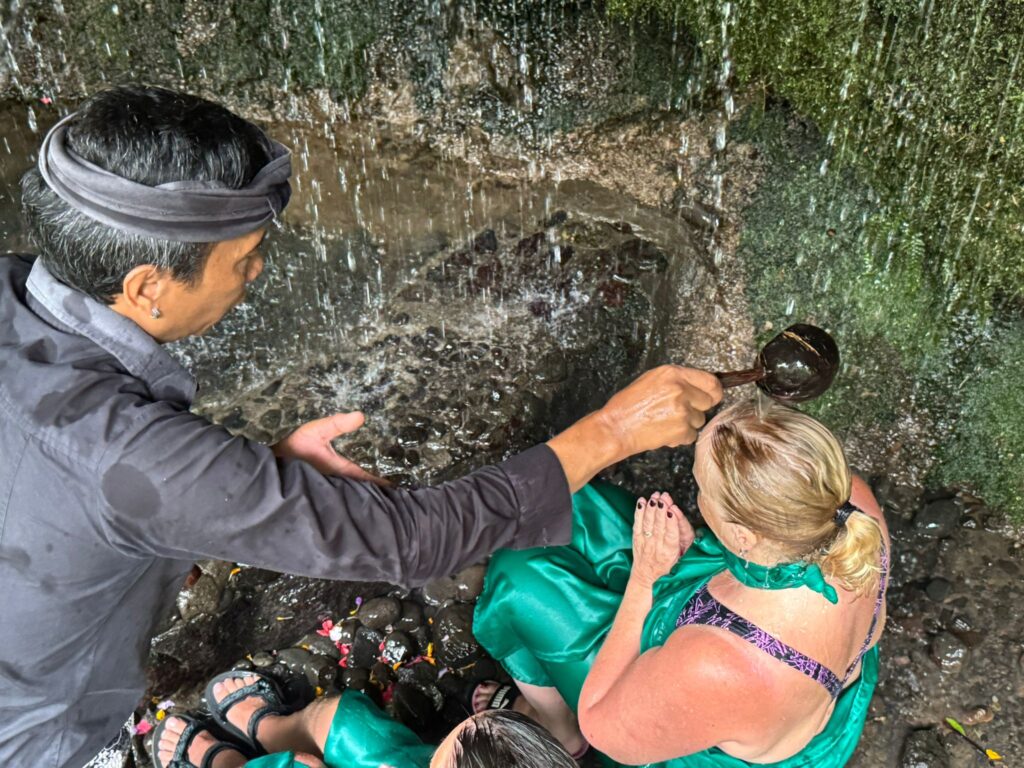
    Our days were light with yoga, breathwork and full of journalling. I reflected on what I had seen, and how Bali had made me feel. I had already experienced one waterfall cleansing, and at Shanti I was receive a second.


    The Grief We Don’t Know We’re Carrying


    I speak often about unresolved grief — how we bury it so deeply in the emotional box we carry that we sometimes forget it’s there. I do my own work whenever I sense something stirring.
    But sometimes, we truly don’t know it’s there.


    When you experience a major life change — like when my husband died — you feel shattered. Eventually, you gather the pieces of yourself and put them back together, though they never fit quite the same. You adjust, you adapt, you call it a “new normal.” And you face things as they arise, instead of pushing them down.
    At least, that’s the intention.


    The Healer Who Saw What I Hadn’t


    When the retreat organiser asked if I wanted to see the healer, I thought, Why not? My plan was to say nothing and simply receive whatever came through.


    He asked for my birth name and my business name, added them together numerologically, and smiled — apparently the number 10 is very auspicious.


    Then he asked about my children, and kept returning to the question. I told him I had two sons, one estranged. But he wasn’t referring to them.


    He was picking up on the three miscarriages I’d had.
    He said I had not fully grieved these babies and that their energy was still “hanging around” me. I was stunned. I truly believed I had grieved them. But as he spoke, something in me recognised the truth.


    He gave me instructions for a letting-go ritual at the waterfall the next day — and encouraged me to light a candle for each unborn child.


    Whether or not you believe in this kind of thing, how he knew is still beyond me. That question alone opened something inside me.


    The Waterfall Where Everything Shifted


    The next day, our small group travelled to the waterfall for the cleansing ritual. We were guided to reflect on our intentions — in my case, healing the pain and finding peace.


    After the pre-cleansing, we stood facing the river and were asked to feel into anything that needed releasing. When ready, we were to step beneath the waterfall and scream out our pain.


    Now, we were a group of Brits and Aussies — not exactly known for screaming — but I reminded myself why I was here.
    I stood back from the group and allowed the pain to surface:


    my estranged son,
    my husband’s death,
    our unborn babies.


    A surge of energy rose from my feet, filled my whole body, and pushed me toward the waterfall. I looked for the guide’s signal, but he was helping someone else. I couldn’t wait.


    The scream that came out of me shocked even me — a blood-curdling, primal release. And it happened not once, but three times.


    My friends jumped at the first scream; some turned with tears, feeling the depth of what was leaving my body. I completed this 3 times. I never thought that was all still in me. My close friend held me as I sobbed.


    Afterwards, I felt that good post-cry clarity — but more than that. I felt a settling. A sense that the final missing piece of my inner jigsaw had clicked into place.

    Integrating the Shift


    Over the next few days, I journalled and reflected deeply. That shift didn’t just ease old grief — it helped me face current changes in my life, ones I had been resisting. Relationships I had tried desperately to keep the same began to feel quieter. More peaceful.


    It was as if something inside me finally exhaled.
    And as always, I continue to stay present with it — mindful, grounded, open.


    You Don’t Need Bali — You Need a Remembering
    Here’s the thing: you don’t need to go to Bali to experience this kind of clarity. Bali didn’t change me — it reminded me of who I already was.


    Life brings change — some welcome, some unwanted. And sometimes those changes redirect us, nudging us off a path we were never meant to cling to.


    Sometimes change doesn’t break you.
    It simply asks you to remember who you are.
  • The Gift of Life: A Story of Love, Loss and Legacy

    By Di Parker, The Good Grief Coach

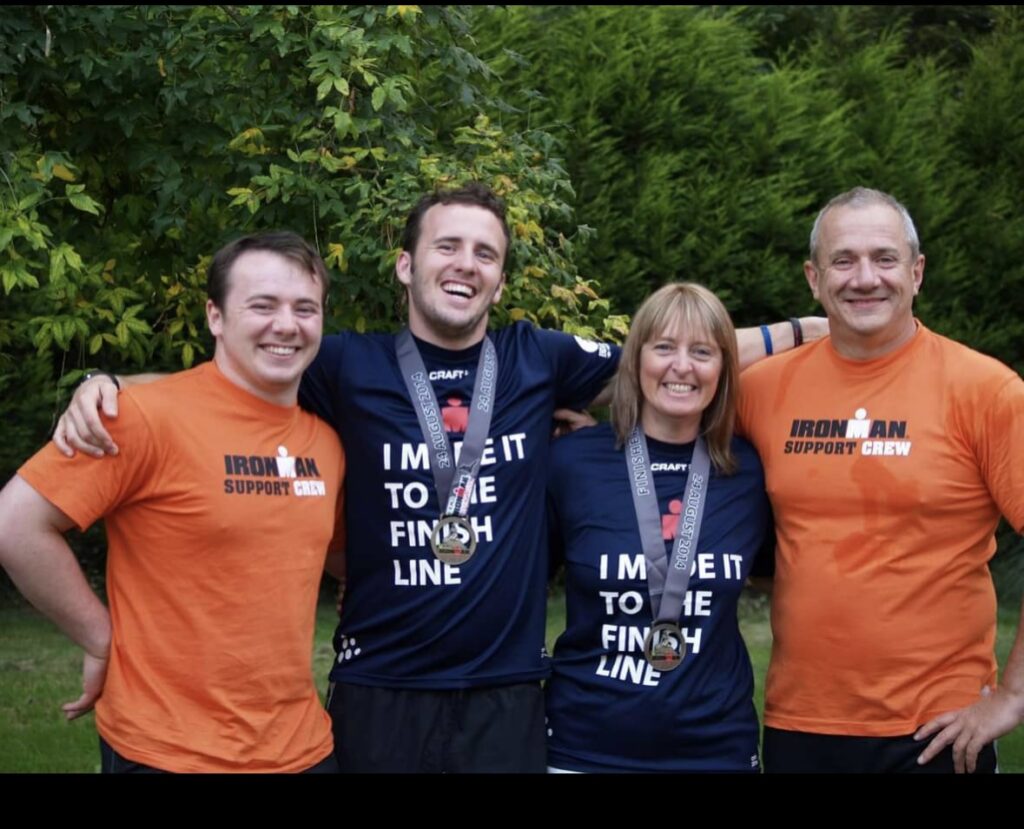
    Taken two years before Andrew died. A race he was supposed to take part in.


    Ten years ago, my world shifted in a single phone call.
    My husband had been living with a long-term illness for many years, but that day we learned the news that would change everything — he needed a liver transplant.


    The doctors had found lesions on his liver. It was cancer. Before he could even be considered for a transplant, he would have to face that battle first.


    At Liverpool Royal Hospital, we found ourselves surrounded by a team of extraordinary professionals who cared not only for him but for us as a family.

    Their compassion carried us through the endless tests, treatments, and nights of worry. Miraculously, he cleared the lesions and we began to talk about hope again — about what life might look like after a successful transplant.


    Because he was also living with haemophilia, the transplant would mean something even greater. It wouldn’t just save his life — it would change it completely. For the first time, he might live free from haemophilia.


    He had so many dreams waiting for him. A passionate member of the Manx Tri Club, he’d spent ten years as their referee and secretly longed to complete an Ironman himself one day. On one of our many visits to the hospital, we passed a wall of posters for the “Transplant Games.” I smiled and nudged him, saying, “There you go, love — your next challenge.”


    Sadly, that moment would never come.

    When Everything Changes


    One evening, we were flown from the Isle of Man to Liverpool again. The team suspected a bleed into his lungs, and both the haemophilia and liver specialists worked tirelessly to stabilise him. Behind the scenes, phone calls were being made to transplant centres across the country — the situation had become urgent.


    I was in shock. It felt like everything was happening in fast-forward, as though we were being swept into a future we hadn’t prepared for. London was mentioned as a possible destination.
    Then one of his consultants — a man I had come to trust — gently asked me to step aside for a conversation.


    The bleeding wasn’t from haemophilia. The cancer had returned.
    Within hours, he was rushed into surgery. I waited, suspended in disbelief, with our boys beside me. Then the head of the transplant team came to deliver the words that would shatter our hopes.

    Grieving More Than a Life


    When someone you love dies, especially after a long illness, grief arrives in layers. I wasn’t only grieving his death. I was also grieving the dreams we had built together — the plans, the laughter, the future that would now never unfold.


    When your life has been so deeply intertwined with another’s, it isn’t just a person you lose; it’s the version of yourself that existed in that shared world.


    The days that followed were a blur — of logistics, decisions, and trying to hold my family together. I was incredibly fortunate to be surrounded by compassionate friends, family, and a dedicated hospital team who helped bring him home to the Island.


    But not everyone has that support. And that’s why I am so passionate about the work of charities that stand beside families during and after transplant journeys.

    Why Support Matters


    I’ve had the privilege of meeting people like Diane Taylor and Pam Makin, whose dedication and compassion offer a lifeline to families in moments of unimaginable strain. Their knowledge, their presence, and their empathy are priceless. When you’re standing on the edge of fear and uncertainty, they are the people who quietly hold you steady.


    Their work reminds me that behind every transplant story — whether it ends in life or loss — there are families navigating love, guilt, gratitude, and hope all at once.

    The Gift of Life


    Did you know that under the new opt-out organ donation law introduced in January this year on the Isle of Man, your relatives can still overturn your wish to donate if you haven’t told them?


    That means your voice matters more than ever.
    Please, have the conversation. Let your loved ones know your wishes.


    Choosing to donate is choosing to give another family the chance to hope again — the chance at life that my husband longed for.
    It truly is the greatest gift one human being can give another.

    Please register and share your wishes with your family. I will be doing a podcast with Diane Taylor and Pam Makin on the 14th December 2025. Any questions please email me Diane@thegoodgriefcoachiom.com or catch the recording on my Youtube Channel, The Good Grief Coach, Busting Life’s Challenges.

    Thanks, Di x


  • When Triggers Become Teachers

    The Impact of Deep-Rooted Losses
    And how they influence your life.


    When you’re triggered, how do you respond?


    Do you simply react in the moment—or do you pause, breathe, and get curious about why this particular situation has arrived? What learning or healing might be hidden within it?


    That’s the calm, rational part of our brain speaking. And for the most part, I like to think that’s how I handle things. Unless, of course, the trigger has pain attached to it. Then all bets are off—grief floods in, big time.


    I’ll come back to that story in a moment. But first, I want to share something else that cracked something open for me.

    A Meditation That Changed Everything


    I once joined a meditation with Rosemary O’Donahue, and she asked us a simple question:


    “What do you want to let go of?”
    Out loud, I said: Pain.


    Then she asked:
    “And what do you want to let in?”


    That question stopped me in my tracks. Letting go? I do that work all the time with clients. Reframing, shifting perspectives, releasing what no longer serves. But I had never truly thought about what I wanted to invite in.


    I whispered, Peace.


    And instantly, hot tears slid down my cheeks. I was finally allowing myself to grieve something I had been holding onto. Saying it aloud shifted something that had been stuck inside me.

    The Trigger That Followed


    Later, another trigger arrived.


    Triggers can feel like obstacles—or gifts. Most of the time, I try to see them as gifts. Opportunities to reflect, to ask: Why has this memory or feeling arrived now?


    But this one hit hard. It came in the form of a photo on Facebook.
    Close friends—people who had always been there for me—were gathered for a special occasion. I hadn’t been invited.


    Logically, I knew it made sense. I was in Ireland at the time, so I couldn’t have gone anyway. But still, the image hit me in the chest. It brought up grief, pain, and a deep sense of being excluded.
    I journaled. I spoke to my coach (who immediately saw through my “I’m fine” mask and gave me some homework). I didn’t want to carry that pain forward into my friendships. So I sat in meditation, asking:


    What is this really about? What do I need to release so I can let peace in?


    And then it landed.


    It wasn’t really about the photo at all.
    It was about my husband’s death—nine years earlier.

    Realising What I’d Been Carrying


    When he died, so did the dynamics of my friendship group.
    At first, they rallied around me. The couples included me. They held me in that circle of love and support. But over time, things shifted. Gatherings became “just the girls,” and I was left on the edge of what once felt like home.


    Without even realising it, I had been fighting to hold onto those dynamics. For nine years, I had been carrying the weight of that loss—desperately wanting things to stay the same.


    But they weren’t the same.
    And they never would be.


    Sitting there, I realised I had to grieve another aspect of my husband passing, I had to grieve also the friendship dynamics as they had been, to allow for what they are now. To let go of what was, so I could embrace what is.


    And in that letting go, I finally found peace.

    What About You?


    So, let me ask you:


    • What have you been struggling with in your relationships?
    • Where are you holding on tightly, trying to keep things the same, when in reality they’ve changed?
    • What would it feel like to release that struggle—and allow something new in?

    A Simple Process to Try


    Here’s what has helped me, and what I often share with clients:


    1. Acknowledge the trigger.
    Is it a recurring feeling? An image that stirs sadness or heaviness? Don’t dismiss it. Notice it.


    2. Let it go.
    Visualise it like a scene from a movie. Ask yourself: What have you come to show me, so I can release you?


    3. Journal it out.
    Let the feelings speak. Do not just analyse logically—feel them. Often, they’ll point to something deeper that needs grieving.


    4. Decide what you will let in.
    Peace? Healing? Calm? Love? Breathe it into your body. Surround yourself with it. Claim it as yours.


    And most importantly—remember you do not have to do this alone. If it feels too heavy, reach out for support.

    A Few Gentle Reminders


    • It only takes 9 seconds for a thought to take root—and 17 seconds for it to spiral into an emotional loop. Catch it early, and you can shift it.


    • Beliefs are just thoughts you keep repeating, with feelings added in. Change the thought, and you begin to change the belief.


    • Change is constant. You can fight it, or you can find strength in it.


    A new life is waiting on the other side of what you release.

    If any part of this has stirred something in you, please do not push it down. Get curious. Breathe into it. Allow yourself the gift of healing.


    Much love,
    Di 💜

  • Do You Want to Hit Rock Bottom Before You Do Anything?

    By Di Parker, The Good Grief Coach


    Let’s Be Honest…

    I hear you — bit harsh, Di — but it’s true.

    Most people wait until they’re completely overwhelmed before asking for help. Why?

    • Because of the “British stiff upper lip?”
    • Because you believe you have to be strong?
    • Because someone once told you, “God doesn’t give you more than you can handle?”

    When you’re on your knees, these sayings don’t help — they keep you stuck. You start asking:

    “What’s wrong with me?”
    “Why can’t I handle this?”
    “Why am I not over it by now?”

    Through my grief work, I’ve come to understand these patterns. But back then? I had no idea there was support “out there” for me.


    My Personal Rock Bottom

    Here’s a glimpse of what happened to me in just three years:

    • My husband was diagnosed with a life-altering illness. We were told they couldn’t say how long he had left. We kept it to ourselves.
    • I found out I was pregnant — and then miscarried.
    • Our new business brought pressure, staff stress, and financial challenges.
    • Our dream of working together meant spending more time apart.
    • We had hospital appointments off-island.
    • Our eldest son was diagnosed with dyslexia.
    • A year later, our youngest was diagnosed with Crohn’s disease.
    • Our beloved dog of 15 years — the reason we started our business — passed away.
    • My horse of 32 years, who I’d had since I was 13, also died.
    • A man from the garage where we bought our vans committed fraud, dragging us into legal battles.

    All of that — in just three years.
    It broke me.


    The Turning Point: Miracles in Disguise

    And then — miracles.

    • My husband became a personal trainer to stay healthy and strong.
    • I retrained in massage therapy — and everything began to shift.

    But the real change came when I noticed something unexpected…


    You Wear Your Stress

    Clients were having emotional meltdowns on my massage table. The body stores stress — and it was showing up everywhere.

    That’s when NLP Coaching (Neuro Linguistic Programming) crossed my path. That was 21 years ago — and it changed everything.

    I started learning:

    • How to set boundaries
    • How to protect my energy
    • How to listen deeply — and hold space for others without losing myself

    And I started healing.


    So… What Is a Coach?

    A coach is someone who:

    ✅ Creates a safe, non-judgmental space
    ✅ Helps you explore your challenges
    ✅ Guides you to find your own solutions
    ✅ Gives you tools to shift mindset and behaviour
    ✅ Helps you uncover (and change!) limiting beliefs

    A limiting belief is just a thought you keep thinking — until one day, you believe it’s true.

    Can beliefs really change that easily?

    Remember Father Christmas?
    Exactly. You believed — until someone told you otherwise.

    (Side note: Don’t mess with the fairies — Isle of Man joke!)


    Why I Created Just Ask A Coach

    Because coaching changed my life, I wanted to make it easier for others to access that kind of support.

    Together with Jan Tinsley and Mario Riccardi, we built Just Ask A Coach — a platform where you can bring your issue and find someone who can help.

    And now, we’re bringing that support in person


    🎉 Just Ask A Coach – Pop-Up Event 🎉

    🗓 July 16–17, 2025
    📍 Talbot Chambers, Athol Street
    🕒 Drop-in times throughout both days

    Come and meet our coaches.
    Hear short, inspiring talks.
    Experience what coaching really feels like — safely, without pressure.

    Whether you’re struggling yourself, or want to better support your staff, team or family — this event is for you.


    You Don’t Have to Wait for Rock Bottom

    Coaching helps you feel empowered, grounded, and supported — before things fall apart.

    I can’t wait to welcome you.

    With warmth,
    Di Parker
    The Good Grief Coach

  • My New blogs

    I used to have a site dedicated to my blogs but this is now being incorporated into my main site here at the Good Grief Coach.

    Over the coming weeks, more articles will appear here as I continue to post my thoughts as well as transferring the archive from my previous site,

  • Its Not Your Fault. But it is Your Opportunity!

    Its Not Your Fault. But it is Your Opportunity!

    When Your Teen Starts Falling Apart (And What Might Really Be Going On

    If you’re a parent who’s at the end of their tether right now — wondering where your sweet child went and how this angry, confused, distant teenager showed up in their place — this is for you.

    I’ve sat with children who’ve carried more than most adults I know. I’ve looked into the eyes of teens who aren’t acting out for the sake of drama, but because they don’t know how to say, “I’m lost.”

    What if I told you that some of the biggest emotional breakdowns I’ve seen in teenagers were never really about now?

    They were about then.

    The boy who was three when his mum was taken away by police, left with a father who was an alcoholic. No one sat with him and explained what happened. He just grew up carrying that fear in his little body, learning not to trust anyone. By the time he hit twelve, he couldn’t take rules or teachers or any kind of authority. He wasn’t being difficult. He was scared.

    Or the dyslexic boy who’d been called lazy so many times he started to believe it. No one caught it early. No one adapted their approach. He didn’t even know he had a learning challenge — all he knew was that he was failing and it wasn’t fair. He snapped one day and threw a chair. That was the moment the school finally paid attention. But how long had he been waving the white flag before that?

    And then there was the girl who grew up a stone’s throw from the sea and had never set foot on the beach. Her mum was struggling with addiction. Her older sisters raised her. She learned early not to ask for anything. Not to expect comfort. She was the quiet one — polite, invisible — until one day she wasn’t. And by then, her silence had become a wall that was hard to climb over.

    These are the kinds of losses we don’t always name as losses.

    Children don’t always grieve just because someone dies. They grieve what they never had. The safety they lost. The love they felt was taken away. The normality they watched slip through their fingers.

    Sometimes, that grief lies dormant until the teenage years — when they start seeing the world differently. When they question more. When they try to make sense of who they are, where they came from, and why they feel so… unsettled.

    And if we, as adults, don’t recognise that deeper pain underneath the outbursts, the shutdowns, the messy emotional waves — we miss the chance to help them heal. Lets face it, most adults don’t know this!

    So if your teen is struggling right now, please know this: it might not just be hormones. It might not just be “a phase.” It might be a story that’s never been spoken. Hormones just heighten things!

    Tips For You To Action

    Bring back eating around the table with no phones! It might sound impossible, but it works! Even if my partner picks up his phone, they tell him off! It is such a special time to find out what is going on in each others day. Do not use this as an opportunity to interrogate them, but ask questions like, what was the best thing that has happened to you today?

    Talk to them by sharing some of your own stories, or perhaps prior memories “do you remember when…” even if they resist it at first, be patient and allow them space to open up. Ask questions about them such as “what is your favourite band at the moment? . Be available if they ask if they can talk to you. Make that time, and if you are busy in the middle of some important email (although I would challenge that) say can I come and see you in five minutes AND MAKE SURE YOU DO. It is important for children that are feeling insecure to trust you and that you mean what you say!

    If you just don’t know what to say and you know your teen is troubled, just say: I’m here. I see you. You matter. Is it ok if I just sit with you a while? Do not get on your phone, but suggest a walk perhaps with your dog, observe your setting, after all the best place to distract is in nature or by the sea. Perhaps take them fishing or if that doesn’t work, try paining or drawing, jigsaws with them.

    The best ways to get your child to talk is with distractions. You are distracting their conscious mind, which allows the unconscious mind to bring up any issues. The child feels safe to do so.

    At the heart of everything, that’s what they want. To be seen. To be heard. To feel safe. To not have to carry it all alone.

    If you need support having these conversations — or understanding what might be going on beneath the surface — this is exactly the kind of work I’ve dedicated myself to. I’m here, read when you are.

    With love,
    Di
    The Good Grief Coach

  • The Art of Allowing.

    The Art of Allowing.

    The Hidden Depths Series continues and In case you were wondering, you matter!

    This week marks the 8th year of my husband’s passing. Some days it seems like only yesterday, yet others so long ago.

    There have been so many changes that have happened, indeed as with most families. This is what I would like to share with you today.

    Because of what I do, I have come to acknowledge these “happenings” for what they are, a loss and I have been grieving.

    Read more: The Art of Allowing.


    My late husband would sometimes feel like no one cared. Because he had kept a lot of his illness to himself and from immediate family, he would be there to support others, yet sometimes felt that they were not there for him. I only hope that he was around to see the turnout for his funeral to know that this is untrue.

    Many clients have shared the heartache of friends who didn’t reach out or who saw them and crossed the road to avoid conversations after their loss. Not only are they grieving the loss of their special person, but grieving a relationship they thought they knew.

    This is often because people do not know what to say, so they try to avoid the conversation, perhaps thinking that they will chat in the months that follow, to give that person space.

    When I explain this to those clients, more empathy appears. We acknowledge the pain, as we are working together on their grief, bringing forgiveness of that person for their own wellbeing. That leads to acceptance and no doubt a kinder conversation when they do finally meet.

    Top Tip For You

    Incidentally, if you find yourself in those sad circumstances it is perfectly alright to approach the person who is hurting and say, “I am so sorry for your loss, there are no words” follow up with a hug if that is you, and ask “is there anything I can do for you?” Do not fill the silent space but allow the person to talk. If they are not ready to talk, simply sit with them and be present. “I’ll just sit with you here for a while if I may.” Do you know that can be one of their greatest gifts.

    Do not say “I know how you feel” because you do not. You might be able to relate, but you do not know how someone else is feeling.

    Do not compare “Oh this happened to Mrs Bloggs and she’s doing well, you will too.”

    This will leave the person feeling angry or worse, in a depressive state.

    What life didn’t prepare me for after his passing was the other changes that occurred in my family. You would have read in a previous blog about estrangement, but it is also those family members who you had become close with, that you see and feel shift in the years that follow.

    Letting Go Off Children

    There is an element of letting go when children leave “the nest,” and we grieve them no longer being with us, yet are also excited for the adventures ahead. With children currently finishing school in the UK to move to university, this can hit parents hard, albeit we see it logically as the next step, do not disregard the feelings in your heart.

    The work that I do helps you with understanding grief and you would recognise that those experiences are also losses. Then there maybe fear… how will they cope, how will they feed themselves, who is going to be therefore them to support them in their struggles? This is pre-grieving.

    If you haven’t already, you have (at the time of writing) 4 weeks to show them how to cook, clean, shop, budget, set boundaries, exercise and for them to have down time in their busy schedules! To enjoy the experience and have some fun.


    Unexpected losses

    We were a very tight-knit family. I truly believed in the phrase “the family that plays together stays together” alas this was not to be. For your immediate family, perhaps but I think I took this saying literally, indeed included other children I looked after in my journey of bringing them up.

    As they grew, we invented different ways to help keep the fun element of being together going. Each Christmas we used to dress up in the evening. Each family would take a turn in picking a theme. We started this when we had Christmases after my father-in-law died. Yes, we had had the odd dressing up party, but this became a Christmas event and something I really looked forward to.

    After my husband died, we did about two before the interest dwindled. I came to realised that this “special time” that we had together was stopping. Those children were now creating their own type of Christmases, and the family around me drifted into spending (quite rightly) a different time with the new extended families that had joined theirs.

    As this ‘watering down’ of connections happen, other decisions can be made that hurt equally. As much as you can logically understand them, you can find yourself on the periphery of family occasions, ones you cannot help thinking if my husband was alive, we would have been invited to. You could go down the rabbit hole of believing that you do not matter.

    Would you have known those to be losses and that you were grieving?

    Here is what to do if you are experiencing this type of loss.

    1. Feel into the loss and allow any grief to arise, cry if you need to. You are experiencing another end of a familiar pattern of behaviour.
    2. Take yourself off to the beach and pick up a stone. Place your anger, upset, frustrations into the stone and throw it into the sea.
    3. Stand in a field and shout your head off. Alternatively use a pillow!
    4. Write out any hurt that you are carrying on a page. Do not stop for punctuation, capitals, paragraphs because no one is going to read it. So do a ‘hurt dump.’ Perhaps burn after you have finished as a cleansing.
    5. Give yourself space to allow those feelings to settle. Logic brain might help here, the age the people are, they are getting on with their own nest as they should.
    6. Be kind to yourself. Think about any changes you have enjoyed, people that you have attracted into your life, make some fun plans with them.
    7. Try tapping, grounding, love kindness and compassion meditations (videos on Youtube).
    8. Epsom salt soak, 20 minutes as hot as you like your bath and relax both body and mind.
    9. Make sure that you get into REM sleep.

    Avoid

    1. Emotional eating.
    2. Drinking to comfort yourself.
    3. Sitting in anger or even hate. Revisit above!

    Emptying these emotions out, understanding that you are grieving allowing all the energy out means that you will not feel the need to keep them bottled up inside. Holding energy in is stressful and that energy can appear when you are not expecting them, when you are next triggered by similar feelings.

    Acceptance

    “This too shall pass” is one of my favourite quotes that I tell myself often when these emotions are triggered. Pain arrives to show you that there is something to deal with, once you understand the loss. You now know that you are or were grieving. How attached you are to that loss, depends on how much you grieve. Peace to emotions/situations arrive when we find acceptance.

    When were you last triggered by that kind of loss? If you need any help, let’s jump on a complimentary call. https://calendly.com/goodgriefcoach/30min.

    You do matter

    Know this for sure, you do matter. Your life may look extremely different now, as indeed mine does. I now have a new partner and his children in my life. I am joyful to know that I have granddaughters, even if I don’t see them, I know that they are about. I now have my parents living with me albeit in a separate part of the home, enjoying renewed connections with them. There was a chunk of time lost when my own “nest” took my time and focus. I am grateful for that. None of that would have happened if I had not been here or mattered, right?

    I end with one request, you have come this far, read this blog now, will you please go and do something nice for you!

    With love
    Di
    The Good Grief Coach

  • When Hidden Losses Make An Impact On Your Life

    When Hidden Losses Make An Impact On Your Life

    And you had no idea that you are grieving!

    I was recently on a course that friends were hosting called “The Entrepreneurs Journey” and met some wonderful new people.  As much as I had done this course before, I love taking time out to go over the material and create new ideas.  (Information below about how you can find out when their next course will be!)

    Eye Opening Moments

    We were divided off into groups of two to discuss our businesses and by listening offer some ideas.  Such fun.  Anyway, I was paired up with a lovely lady who had moved from South Africa.  I started talking about Grief and how people see this more linked to bereavement but not always to things like divorce, financial issues, health issues etc.  Then I said “or like your good self who has moved not just house, but country.” 

    Her eyes widened and she teared up.  Until that moment she had not realised that she had been grieving leaving her beloved country.  I then asked her how long she had been on the island (Isle of Man) expecting her to say a few months… Jess said “11 years!”  “Wow” I replied, “that is a long time to be grieving a loss such as that.”  We agreed to meet up for a coffee after the course in order to explore this loss further.

    This exchange felt right for me too, as she has some skills that I currently need so a coffee catch up was arranged.

    Jess and I met, and I asked her to start her story from the beginning from what she had felt had been triggered for her.  Jess had had to leave her country because of a business opportunity for her husband which had brought them to the island.  

    They had had to up route their children from family and friends.  This journey was only supposed to be temporary, two years, but as mentioned it was now 11 years!

    Jess had continued to live in her country in her mind.  She was conscious of what her children were missing, not being connected to those family members indeed the interaction and getting to know their cousins was a big heartache for Jess. She lived with a fear of “never seeing them again.”  

    I asked her if she had ever been back.  “Yes” she replied, “we have been back for holidays” to which we both chuckled as she realised that that statement was untrue, but emotionally it had not landed.  

    This then triggered another thought for her, that when she landed in her home country, she was instantly thinking about leaving to return to the island so was only half present to actually being with her family and friends. Jess had found the whole experience stressful. She shared, “We would come back happy but exhausted!”

    Light bulb moments were appearing.  Because she was told that she would only be on the island for 2 years, she had also not engaged as deeply as she might have with people she met.  Afterall she would also have to leave those people at some point which equalled more hurt! This had created loneliness in her life by making these decisions unconsciously.

    So, in order to protect herself from future losses, she was maintaining a distance to try and not feel the hurt of that potential loss, yet was denying herself close relationships here…and had been doing that for 11 years!

    Why Comparing Can Keep You Stuck In Grief

    Jess started talking about what in her perspective her children were missing out on.  I pointed out that these again were her losses.  Her children had been here (on the island) for 11 years, they have settled and made new close friends over the years, growing up within the schools connecting with their peers. This constant comparing was keeping Jess stuck in grief, and she had not realised.

    A little note on comparing here:  This is what we are taught to do as we grow.  Perhaps firstly with your siblings, oh Sarah could ride a bike at your age…or from school, you announce how many spellings that you had got right on today’s test 6 out of 10, a new record…when you hear those words…”and how did Lucy do?” Your heart sinks as you know Lucy achieved 9/10 as usual.  And so, we go through life comparing ourselves to others and their achievements, wondering often “what is wrong with me, why can’t I do xyz”. Or body shapes sizes etc the list goes on…..  STOP!  You are unique, there is only one of you!  If you want to compare yourself, just do that to yourself.  If you ran a 3k race aim for 6k, 13K or a marathon.  Those are your hopes, dreams and (after training) expectations to complete.  Look to your own PB!  

    Of course, we spoke about the various ways in which we can keep in touch now with relatives, and not just ones in far off places.  I use social media to stay connected to a lot of my extended family.  

    Her original country was her home and in her heart was still living there.  Until we spoke, she had not realised that she was grieving.  The political state of her country means also that it is not likely that they will return any time soon.  This raised the issue “where is home?”  Living here without her own family close to her had been really hard for Jess. She was sad that her children were not experiencing their lifestyle and sharing their culture which was their heritage. 

    As with most parents, home is where your children are. Until they move of course!  A fear for Jess was that she wouldn’t have a home set up for her children to feel at home, for them to return to. We talked more at length about that, helping her to see that home for the children will be wherever she and her husband are!  She laughed as she shared that they had actually just bought a house, their first home on the island.

    She had been approaching this house as a temporary move and acknowledged that she needed to put more love into being present in that home to help make it feel the way she truly wanted it to. 

    Jess said that there was a big community of people from her country here stating “doesn’t mean we are all alike.  Sometimes it’s a community coming together rather than a connection.” But acknowledged that she had in fact made close friends.

    Hidden Depths Released

    Just talking about the hidden depths of unresolved grief was enough to help her look at her life from a different perspective. 

    I am pleased to share that a lot of reframing, looking at different perspectives was enough to help Jess make some heart-warming changes.

    1. Her children were in fact extremely happy here. They know no different.
    2. Home is where my family is, not a physical building.
    3. We do have friends here and are blessed.
    4. She is working on the barriers that she had put into place and is having fun removing them!
    5. Since buying a house that she is making a home, her family have settled better and it is a blessing. 

    The effect of unresolved hidden grief had had a big impact on her and the way she had been living the last 11 years.  Perhaps you too can relate.  As we grow and evolve, we can be triggered by so many hidden losses, what do you do?  Push them back down, shake them off to be “something in the past that you cannot do anything about” or how about saying  “ha, I see you and now I am going to do something to shift you because I no longer want to wear you!”

    Unresolved grief does affect our lives, our decision making, how we are showing up in the world.  Once unearthed, do yourself a favour and find support to clear that stagnant energy.  To free your body mind and spirit to live your best life.

    Last Word From Jess

    My thanks to Jess for permission to share her story with you in order that you too can be free. 

    Jess said “I shared this story with a friend, and she teared up, stating that it was so sad.  And you know what, I smiled with such peace and in that moment, I knew I’d worked through it!  I am not sad anymore, I’m excited about my life here now and what may come next!  Thank you for that Di!  I feel such relief….I will continue to treasure SA and my precious people there, but its given myself permission to leave that behind now.”

    The power of a conversation about grief and loss!

    Love

    Di 

    The Good Grief Coach

    Ps Please contact Justin Tipper or Jan Tinsley to find out more about the Entrepreneur’s Journey

    Pps If you can relate to Jess’s story and would like to find out more, you can book a complimentary call with me on calendly/goodgriefcoach 

  • Hidden Depths

    Hidden Depths


    It has been a while since I wrote a blog, for that I apologise. I have been busy creating a programme to help Parents and Teachers teach children about grief. Ironically, parts of this journey have caused me grief!

    Having approached our Board of Education, who’s representative acknowledged the need but unsure where they would run the programme, to writing to various schools asking to come and talk has felt frustrating to say the least, and yes, I have been grieving.

    How you ask? Great question!

    Because my hope was that this would be warmly received as I am told it is very much needed. The big dream is that this will be taught in every school and my expectation (based on the feedback for the need) was that this would be an instant “YES” which of course, it has not! YET!

    WHEN IS A LOSS, A LOSS?

    It very much felt like a loss, because I had been working on this for 18 months at the point of launch. I have invested in people to create and proofread the workbooks. I felt despair when a reply from one school said, “we already have grief covered in schools” and my reply was lengthy. They do not have this programme which is about tools before the child endures a significant loss and that is not just a death!

    Deep breaths. I have learned to share such hurdles with my fellow coaches that know how passionate I am about this project and a solution is being sort. I am so very grateful for this support.

    Would you have seen that as a loss? Would that have felt like a loss to you? Would you have known that you were grieving?

    Not many people would. They would perhaps use phrases like “I am feeling out of sorts” or “I am feeling depressed that things are not opening up as I had hoped.” I temporarily felt like that but knew enough to know that I was sad and pre-grieving a potential loss.

    Of course, with that came a surge of energy that said, right I will find another way….and with the help of my Business Coach, I am! That is also when I started having some fun with this, meeting different people for lunch, reconnecting with old work colleagues that might be interested and jumped at an opportunity to talk as a keynote speaker.

    How many things have you tried in life that have not gone according to plan? Probably a lot, but in that journey, what other great things arrived from this?


    FROM BREAKDOWN TO BREAKTHROUGH

    We have a saying in coaching “with every breakdown comes a breakthrough” the difference is, coaches don’t normally stay in that space too long. Either they can coach themselves out of it, or call someone in their coaching community for an empowering conversation. We acknowledge that we have been triggered by something which is an opportunity for us to learn more about ourselves and grow as a person.

    The pain of overwhelm, frustration, depression can keep you stuck in those moments in life. Perhaps where you cannot see or feel a way out. We can keep ourselves in that space for days, months or years. Living that loop. Feeling negative and hearing yourself being negative towards yourself.

    What often happens then is an energy shift because your vagus nerve has had enough and your spirit inside wants the best for you, you start looking for support to make those changes.

    RECOGNISING ANGER AND BUSYNESS

    Perhaps it might be anger that arrives to help you shift, perhaps you may start venting to someone… as much as that person may feel the need to support you, hearing your own words out loud can often help you make shifts. And the best release, tears. Let them flow reducing naturally the stress anxiety or anger that you have been holding onto. As I say to my clients, they water the future so let them flow.

    This is the point that a well-meaning friend might start quoting myths around loss to you! Don’t feel sad. When you have had a loss of any kind, you will grieve depending on how attached you were to that loss (or potential loss) so it is perfectly OK FOR YOU TO FEEL SAD! And follow through on the last paragraph if necessary!

    At moments like this you may feel the need to ‘keep busy’ so you do not sit and ponder about this situation. That can work for some, but I find it just delays the outcome. If I am worrying about ‘x’ and trying to work on ‘y’ I am not giving ‘y’ my full attention. In these moments I find journaling helps me a lot. I have a writing exercise to follow through on if emotions still remain high, but often it is enough to write it out on paper. That way I am not carrying the situation in my head or as mentioned, find a coach! Share your preferred method below, it can help someone. If you would like the writing exercise, email me Diane@lifeafterlossiom.com.

    Frustration can be my biggest issue. I have an idea, I have planned and worked on this idea, shown and shared with many who say, “we need this” leaving me in a situation that still appears to be ‘waiting.’

    SABOTEURS!

    This is also an opportunity to look at what saboteurs are showing up and joining the pity party! Identifying them at least gives you someone else to shout at! My money mindset coach said to “see them as your board of directors.” Sometimes they help, sometimes they hinder. Ultimately, these are habits and programming we have picked up as we grown up from those around us. So, my victim, hyper-achiever and restlessness saboteurs were very much noisy participants of my board for a few days! Once you recognise this you can tell them all to shut up! Again, realising that they are not helpful, and they are distracting means, you can deal with them quicker! If you are unaware of your saboteurs, then visit www.positiveintellegence.com and find the quiz. One of the most empowering things that I have done!

    EXCUSES AND COPING

    Then came the next hurdle. My money mindset coach said “have you heard about human design?” “No” I replied. Another quiz revealed that I am what they call a “projector.” I won’t go into that too much now but basically, a projector must ‘wait for the invitation’ or if they try and push themselves onto a third party, can be left with feelings of bitterness.

    Oh lord, another hurdle to overcome! But it was also very interesting. It made total sense to me and the issues I have been having not just now but throughout my life. When I have been invited to work for people (no interview just offered the job) things have run very smoothly. While waiting for clients to decide if they do want to work on their grief, (which can be hard seeing people decide if they want to live in that pain/place but know it must be their decision) that when are ready to do so … all flows so well.

    Then waiting for an invitation made sense, but not an excuse!

    After I had finished the pity party, I was fired up and gave myself permission to keep going. I found the right people to help me, and I know that I have more to share to help people to understand that ‘grieving a loss of any kind can have a devastating impact on your mind and body.’

    What do you do when you have had a bad week? Go for a drink? Buy cake? Or go for a long run? Of course, the last suggestion is a healthier one, except if it is continuous and you do not give your body time to rest in between. They are called STERBS. Short Term Energy Releasing Behaviours and we all do these to help us feel better, rather than acknowledging the grief.

    In this next series of blogs I am going to cover more of these hidden depths where unresolved losses lurk, because these are the hidden killers. Holding onto them causes stress, anxiety, depression and has even been linked to PTSD, all because the person doesn’t realise that they are grieving a loss.

    What life challenges have you or are you now thinking about? Sometimes, just to acknowledge these things can help us make the shift that is needed.

    Need an empowering conversation? Give me a call.

    With love
    Di Parker
    The Good Grief Coach.

    Ps. If you are a parent, guardian or teacher interested in learning more about the children’s programme “Why Children Need To Talk About Grief” then please do reach out for more information.

  • Estrangement, Loneliness and the Power of Coaching

    Estrangement, Loneliness and the Power of Coaching

    I was shocked at the number of people who have experienced this kind of pain in their lives. All stuck in their grief, and yes, I was one of them.  I am still estranged from my son, but I have learned so many life lessons around this topic, that I am now going to share them with you in the hope that you will find comfort and strength to talk about this new phenomenon, or is it?

    Mother’s falling out with their daughters is not strange for a short time, but when the time passes the gap becomes more, perhaps turning into years, and why?  For what reason?

    Now don’t get me wrong.  I know that some people have good reasons why they are better off not with their family. 

    But this is only a few in comparison to those that I have met over the last two years.  The majority of these children come from loving homes, and it has been a complete shock to the loving parents left behind to pick up the pieces.

    I can only guess why my own son has decided to estrange himself from the family, but if I did know why, could I do anything about it?  Probably not.  He is seeing life from his perspective and I from mine.  We are unique. 

    When he was younger, we could have very interesting conversations around human psychology, in fact he took his GCSE in that subject.  I often though that he would be an ideal person to come and join me in my business, providing of course that it would have been something that he would like to have done.

    And then things changed big time.  His dad died, he became a father and life happened around him.  That was a lot of losses to deal with.  Death, and loss of your decisions for yourself (now there was a family to think of) at only 25 years of age.  Then his business left by his dad started to fail.  We can summarize why; that is not necessary for this article but to say, it was a loss and another attachment to his dad also lost.  Added to this pressure, another baby and then the lock downs happened.  This has not been a good time for him.  Nor me. 

    From my previous blog:

    I can tell you that the years that followed have been heart breaking for me.  I never would have thought in all my days, that this would happen between my son and myself.  As I mentioned in last months blog, he did something that shook me to the core, something that I thought he would never have done in a million years….but he did.  What, is not important, the why is. (How I internalize that is). That was to become my gift.

    If you are interested in how I internalized that, read part one.

    I have always said that my family were my greatest teachers, they have been my influencers and they continue to be.

    Mothers are quick to think that there is something wrong with us when we experience these types of rejection, stating:-

    How everything is our fault

    How this reflects on our parenting.  If I could have been, better, more loving, attentive. 

     How will society now ‘judge me’.

    And nothing can be further from the truth.  It is not our fault and its not their fault. 

    I can say that because of the way I was, he did not build much resilience to life and there is indeed truth in that but at some point, we must stop and remember that they are adults!

    The modern family stays together much longer.  Financial situations keep children at home until nearly 30 years of age, while are generation were out the door as soon as we could make a life for ourselves.  I myself, married at 20, and my husband was 23 years old.  That can put strain on the modern family relationships.

    We can pinpoint things in our childhood that we did that helped us with building resilience, for example how old were you when you had your first job?  Learning to interact with people. Have adult influences around you in those situations.  Good or bad, you learned how to navigate them.  I was 14 when I had my first job, and I can remember feeling so proud of myself.  My son until recently, only worked in the family business.  Yes, he was good with clients, extremely good as a PT and was very sociable, but it is different working for someone outside of the family.

    Now of course you must be 16 plus to get a job.  I would definitely encourage that going forward.

    You can tell from reading so far, I have been reflecting on this situation, before I worked on myself, I had same the point of view, with statements such as: ‘everything is my fault’ as a mother you ‘should know better’ and never mind society judging you, I was doing quite the number on myself!

    I then proceeded to do what I did when I was dealing with my loneliness, I looked on face book for groups to help support me and my broken heart.  I found quite a few.  What I did discover is that reading these posts were bringing me down.  Reading everyone’s stories, living for that moment their pain it became too much.  As usual I was looking for ways to help guide me to heal.

    Up to this point, I had not done my process on my relationship with my son, so I did that.  I said “goodbye” to what we had in order to let a new way appear when its ready. I let go of my ‘hopes, dreams and expectations’ of what I hoped our relationship would be going forward.

    That was the hardest thing for me to do, but it helped me settle into where we are ‘now’.     The relationship between us has gone from what it was, but that does not mean that when we do reunite, it could indeed be a lot stronger. 

    At the same time as doing my process on myself I was also working with Sebastien Koellner as mentioned in my earlier blog, on my saboteurs.  This was indeed a winning combination.

    Having grieved the relationship that was, open to what was new, I was “back on the horse” to reach out and help others.  I commented on a few posts in the group I had found and came across a wonderful lady called Janet Hogan. 

    Janet has created a group called Estranged Mothers – Rise and Thrive.  Janet had posted a comment in the group I was a part of, and I just instantly loved her energy.  I reached out and we have been sharing a lot of our thoughts around this topic.  I am delighted to say that in the near future, Janet and I will be doing a podcast and workshops on this very subject.

    We feel strongly that this subject needs a voice, that those of you who are living stuck in your grief, constantly looking for the mere morsal of a communication from these children are not living you own life!

    I know that when I stopped pushing ‘energetically’ then I had some movement from his side.  We will be talking about this and helping you find your feet again.  Give yourself permission to live your own life. 

    There are so many people ‘out there’ who are stuck in this type of grief.  Some relationships do heal and reunite which brings joy to my heart.  We can all carry a little hope with that knowledge, but we do not need to put ourselves on a back burner until that day arrives.

    Janet shares that there are 5 steps to estrangement.

    1. Shock/denial
    2. Despair
    3. Acceptance
    4. Transformation (of ourselves)
    5. Maintenance

    I am sure you can identify with those stages from reading my blog, that I have gone through them all! 

    I will keep you posted when we have the podcast done on Busting Life’s Challenges, and of course there will be a youtube video on the Busting Life’s Challenges Channel. 

    We hope that you will find some way forward for yourself in this article and of course there is always the face book group,  Estranged Mothers – Rise and Thrive.  Yes, I know that Fathers can also be struggling with those issues to.  Do reach out if you need some support, more than happy to have a conversation with you, or I can pass you along to my coaching male colleagues.

    Remember what Abraham Hicks says, go and do something that makes you feel good about yourself.  Put that boat of yours in your stream of life where you want it to be, make things easier for yourself, stop paddling up stream (trying to make things right) and allow, (just be) with healing (if you need some), flow downstream to where the next exciting part of your life will be, but for now,

    Go and float in your boat!

    Love Di x